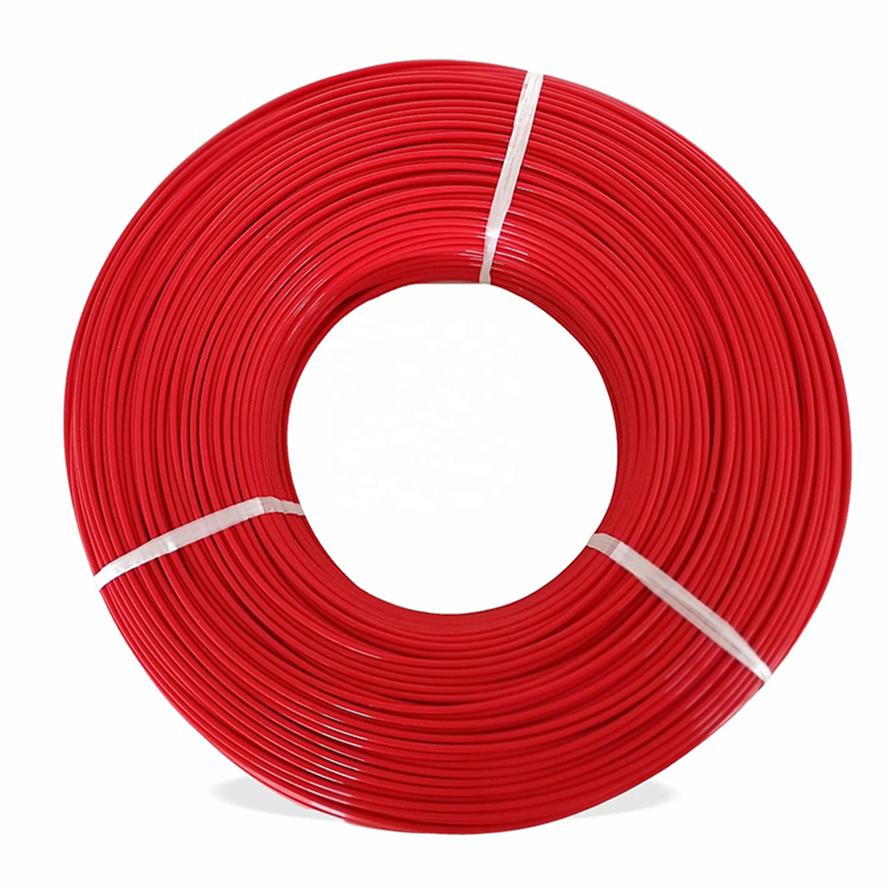
Recently, a leading domestic cable manufacturer announced that it has made major technological breakthroughs in the field of high-temperature cables. This new high-temperature cable uses innovative materials and advanced processes to maintain stable electrical performance and mechanical strength in extremely high temperature environments, providing safer and more reliable solutions for industrial manufacturing, energy transmission, aerospace and other fields.
High-temperature cables: key components in extreme environments
High-temperature cables are special cables that can work stably for a long time in high-temperature environments. They are widely used in metallurgy, chemical industry, electric power, aerospace and other fields that require extremely high temperature resistance. Traditional high-temperature cables are prone to problems such as insulation aging and conductor oxidation in long-term high-temperature environments, resulting in performance degradation or even failure, posing safety hazards to industrial production.
The new high-temperature cable developed this time uses high-performance heat-resistant materials and innovative insulation layer design. The conductor part uses special alloy materials, which can maintain stable conductivity in environments up to 1000°C; the insulation layer uses a new ceramic silicone rubber material, which is not only resistant to high temperatures, but also has excellent anti-aging and anti-corrosion properties. In addition, the outer sheath of the cable has been specially treated and can be used for a long time in high temperature, high humidity and chemical corrosion environments.
Significant performance advantages
According to test data, the service life of the new high-temperature cable in high temperature environment is more than 50% longer than that of traditional products, and its electrical performance and mechanical strength are significantly improved. In extreme environments, the new cable can withstand higher voltage and current loads, and is not prone to short circuit or open circuit, which greatly improves the safety and reliability of equipment operation.
Wide application fields
The introduction of new high-temperature cables has brought good news to many industries. In the metallurgical industry, it can be used for power transmission in high-temperature furnaces and kilns, significantly reducing the failure rate of equipment; in the chemical industry, it can withstand the erosion of corrosive gases and liquids to ensure the continuity of the production process; in the aerospace field, its lightweight and high temperature resistance provide guarantees for the safe operation of aircraft.
In addition, with the rapid development of the new energy industry, high-temperature cables are increasingly used in solar thermal power generation, nuclear power generation and other fields. The introduction of new high-temperature cables will provide more efficient and safer power transmission solutions for these fields.
Broad market prospects
With the improvement of industrial automation and intelligence levels, as well as the rapid development of high-end manufacturing fields such as new energy and aerospace, the market demand for high-temperature cables continues to grow. According to industry data, the global high-temperature cable market is expected to grow at an average annual rate of 10% in the next five years. This technological breakthrough not only enhances the competitiveness of domestic high-temperature cables, but also brings new growth points to related industries.
At present, the new high-temperature cable has passed a number of international quality certifications and has begun mass production. Many domestic and foreign companies have reached cooperation intentions with the company, and it is expected to occupy an important share of the global market in the future.
Industry response
Industry experts said that this breakthrough in high-temperature cable technology not only fills the domestic technical gap in this field, but also provides new solutions for efficient and safe operation in the global industrial and energy fields. With the continuous maturity of technology and the deepening of application, this innovative achievement will bring dual benefits of efficiency improvement and cost optimization to more industries.